

 English
 Deutsch
  Italiano
  Русский
  Español
  Română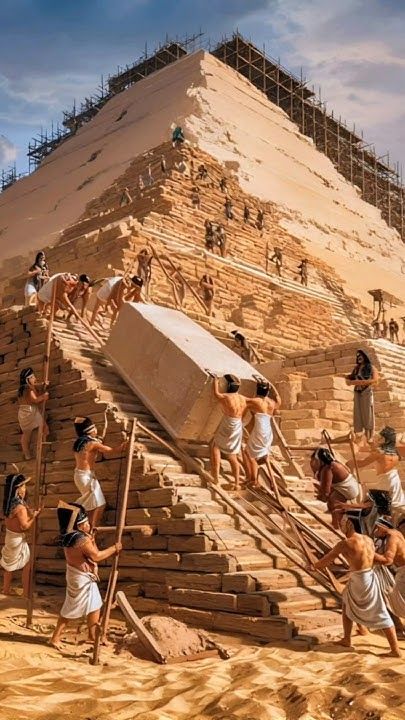
How Were the Pyramids Built in Egypt? Construction Secrets and the Number of Pyramids Supported by Scientific Evidence
Introduction
The Egyptian pyramids are considered the greatest architectural achievement of ancient humanity. To this day, they remain an engineering mystery that continues to fascinate scientists and travelers from all over the world. Despite being built more than 4,500 years ago, these colossal structures still stand proudly, bearing witness to the genius of ancient Egyptians and their exceptional skills in planning and execution.
In this analytical tourism-focused article, we reveal how the pyramids in Egypt were built, explore the true number of pyramids, and present scientific and archaeological evidence proving that pyramid construction was the result of advanced knowledge, engineering, and precise organization — not myths or legends.
How Many Pyramids Are There in Egypt?
Many people believe that Egypt’s pyramids are limited to the three pyramids of Giza. However, scientific reality tells a very different story.
🔹 The True Number of Pyramids
According to the latest archaeological studies, Egypt is home to more than 118 documented pyramids, officially recorded and distributed across several archaeological sites along the Nile Valley, from northern Egypt to Upper Egypt.
🔹 Major Pyramid Sites in Egypt:
- Giza Pyramids
- Saqqara Pyramids
- Dahshur Pyramids
- Abydos Pyramids
- Meidum Pyramids
- Fayoum Pyramids
Archaeologists began documenting pyramids in the 19th century, and with ongoing excavations and discoveries, new pyramids continue to be identified — some still partially buried beneath the desert sands.
Why Were the Pyramids Built?
The pyramids were primarily constructed as royal tombs for the pharaohs, but they were far more than simple burial places. They were deeply connected to religious beliefs centered on:
- Life after death
- Resurrection of the soul
- The pharaoh’s ascension to the heavens and eternal life
The pyramid symbolized the pharaoh’s eternal house, where his mummy, treasures, inscriptions, and sacred texts were placed to assist his journey into the afterlife.
How Were the Pyramids Built? The Scientific Truth
1️⃣ Who Built the Pyramids?
Modern archaeological discoveries clearly confirm that the pyramids were not built by slaves, but by:
- Skilled laborers
- Engineers
- Stone carvers
- Transport and logistics workers
Entire workers’ villages have been discovered near the Giza pyramids, including:
- Residential housing
- Bakeries
- Primitive medical facilities
- Burial sites for the workers themselves
This provides strong evidence that workers received food, medical care, and wages.
2️⃣ Precise Engineering and Planning
Pyramid construction was never random; it was a highly organized engineering process that included:
- Precise site selection using astronomical observations
- Accurate alignment with the four cardinal directions
- Advanced mathematical calculations for angles and heights
Even today, the Giza pyramids are considered among the most precisely aligned structures ever built.
3️⃣ Transporting the Massive Stone Blocks
One of the greatest questions surrounding pyramid construction is:
How were millions of massive stone blocks transported?
Scientific evidence confirms the use of:
- Wooden sledges
- Wetting sand with water to reduce friction
- Transporting stones via the Nile River from quarries to construction sites
Rare ancient papyri have revealed detailed accounts describing how limestone blocks were transported to build the Great Pyramid.
4️⃣ Methods of Lifting the Stones
Evidence-based theories suggest the use of:
- External ramps
- Spiral ramps
- Internal lifting passages
Stones weighing more than 15 tons were raised with remarkable precision — without the use of any modern technology.
The Evolution of Pyramid Construction Through the Ages
🔹 The Step Pyramid of Djoser – Saqqara
The oldest pyramid in history, designed by the brilliant architect Imhotep, representing the first successful large-scale stone construction.
🔹 The Giza Pyramids – The Golden Age
- Pyramid of Khufu (The Great Pyramid)
- Pyramid of Khafre
- Pyramid of Menkaure
These are the most famous pyramids worldwide and represent the peak of architectural achievement in ancient Egypt.
🔹 Later Pyramids
In later periods, pyramids became smaller and less complex, yet they continued to symbolize royal authority and eternal life.
Modern Scientific Evidence
- Discovery of the Wadi al-Jarf papyri explaining the administrative organization of construction
- Use of thermal scanning technologies to detect hidden chambers within pyramids
- Modern studies confirming the extraordinary precision of pyramid measurements, far exceeding the standards of their time
All this evidence proves that pyramid construction was a product of science and knowledge — not mythology.
Why Do the Pyramids Attract Millions of Tourists?
- The greatest stone monuments in human history
- One of the Seven Wonders of the Ancient World
- A powerful symbol of ancient Egyptian civilization
- A perfect destination for cultural and historical tourism
Visiting the pyramids is not just a trip — it is a journey back thousands of years into the heart of civilization.
Conclusion
The Egyptian pyramids are not an unsolvable mystery, but a living testament to the brilliance of ancient Egyptians. Through knowledge, belief, and exceptional organization, they immortalized their legacy in stone. With every new discovery, one truth becomes clearer:
The pyramids were built by Egyptian hands and advanced engineering minds that were thousands of years ahead of their time.

Comment (0)