

 English
 Deutsch
  Italiano
  Русский
  Español
  Română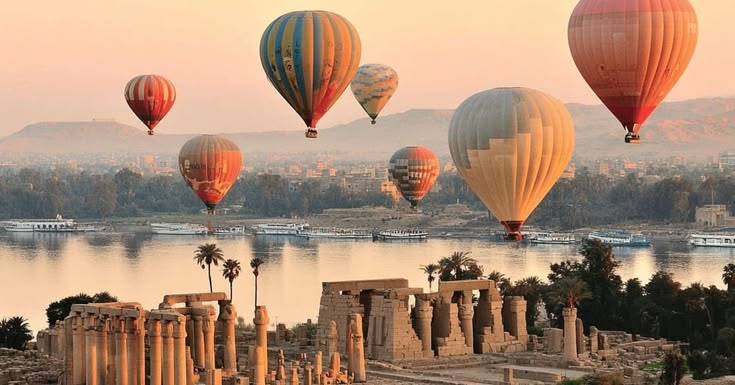
Luxor & Aswan: The Complete Guide to the Temples and Tombs (Without Getting Lost in the Crowds)
There’s a big difference between visiting Giza and seeing the pyramids in half a day, and going to Luxor and Aswan. This isn’t one site, it’s a long stretch along the Nile packed with temples, tombs, and entire cities built over more than two thousand years. Almost every king wanted to leave his mark, so he’d add a temple, expand an existing one, or carve a new tomb into the mountain. Go in without a plan and you’ll end up rushing between sites at the wrong time, in the heat and the crowds, unable to actually take in what you’re looking at.
This guide exists to save you that step. It won’t walk you through the full history of every temple, that’s already covered in plenty of books and websites. What it focuses on is what’s actually worth your time, when to go, and how to structure your trip so you see as much as possible without wearing yourself out.
Why Luxor and Aswan Are Different From the Rest of Egypt
If you’ve visited Cairo and Giza, you’ve seen a slice of the Old Kingdom, the pyramid-building era. Luxor and Aswan show you a completely different period: the New Kingdom, when the capital was Thebes (modern Luxor) and kings were buried in tombs carved into rock instead of pyramids. That’s the difference that makes the two trips complement each other rather than repeat each other.
The geography is different too. The Nile is narrower here, flanked by desert mountains on both sides, and the temples sit on opposite banks for a reason: the east bank holds the temples of daily worship (Karnak and Luxor Temple), while the west bank holds everything connected to death and burial (the Valley of the Kings, Hatshepsut’s temple, the Valley of the Queens). That split isn’t random. Ancient Egyptians saw the sunset in the west as a symbol of death, so everything tied to the afterlife was built there.
The Sites Worth Your Time
Karnak Temple
The largest religious complex ever built in the ancient world, covering more ground than several football stadiums combined. It’s not one temple, it’s a cluster of temples, halls, a sacred lake, and massive statues, with nearly every New Kingdom king adding something to it over more than a thousand continuous years.
Its most famous section is the Great Hypostyle Hall: 134 massive columns, some over 21 meters tall, still carrying visible traces of their original paint in places. Walk through them in the morning as sunlight cuts through the upper openings and you’ll understand why this was the most important center of worship in all of Egypt for centuries.
Go early, between 7 and 8am when the gate opens, before the tour buses unload from 9am onward. A full visit needs at least two hours. There’s also a sound and light show at night if you want a different experience, but it’s not a substitute for the daytime visit since you won’t be able to see the details clearly.
Practical tip: bring a guide, or at least a short book about the site. Without context, Karnak is just stone columns. With it, every corner has a story.
Valley of the Kings
Most New Kingdom rulers were buried here, from Thutmose I to Ramesses XI, across roughly 500 years. It’s a dry desert valley, chosen precisely because its remoteness and difficult access made it harder for tomb robbers, though most tombs were looted anyway in antiquity.
The most famous tomb belongs to Tutankhamun, discovered by Howard Carter in 1922 nearly intact, which is what made it the most famous archaeological find in history. The tomb itself, though, is fairly small compared to others like Seti I or Ramesses VI, which are larger and far more detailed in their carvings and color.
A standard ticket gets you into 3 tombs out of whichever ones are open at the time (they rotate periodically to preserve their condition). Tutankhamun’s tomb and Seti I’s require a separate additional ticket. The air inside is hot, enclosed, and humid from visitors’ breath, so this isn’t a place to linger, twenty minutes per tomb is plenty.
Photography is banned inside most tombs unless you have a special permit, so don’t be surprised if you’re asked to leave your camera or phone before entering certain tombs.
Hatshepsut’s Temple
Carved directly into the mountain on the west bank, minutes from the Valley of the Kings. Its shape is unlike any other temple in the region: three tiered terraces rising toward the rock face, a clean, minimal design that looks more modern than the heavily decorated temples of other pharaohs.
Hatshepsut was one of ancient Egypt’s most powerful rulers, reigning as a full king rather than simply a king’s wife. Her architect Senenmut built this temple for her, and it includes scenes from her famous trading expedition to the Land of Punt, one of the earliest archaeological records of Egyptian trade with East Africa.
It’s usually paired with the Valley of the Kings on the same morning tour since it’s nearby, but be ready to walk. There’s little shade and the heat bounces off the stone.
Luxor Temple
Right in the middle of the city, on the Nile corniche, walkable from most hotels. Unlike Karnak, it’s smaller and faster to visit (about an hour is enough), and it stays open until 9 or 10pm.
The temple was built for an annual festival called Opet, when statues of the gods were carried from Karnak to Luxor in a large river procession. Two massive statues of Ramesses II flank the entrance, and only one obelisk remains standing here, the other now stands in the Place de la Concorde in Paris, a gift from Muhammad Ali to France in 1830.
If your day is short on time, this is the temple to see at night, when lighting dramatically brings out the carvings and the crowds thin out considerably, freeing up your daytime hours for Karnak and the Valley of the Kings.
Abu Simbel
About 3 hours by road south of Aswan, near the Sudanese border, but there’s nothing else quite like it anywhere. Ramesses II built this temple on a scale meant to make you feel small in front of it, four seated statues of him, each 20 meters tall, carved directly into the mountain face.
The most famous story about the site isn’t its construction, it’s its relocation. When the High Dam was planned in the 1960s, the temple was set to be submerged under Lake Nasser. UNESCO led a massive international project to cut the entire temple into thousands of stone blocks, move it, and reassemble it at a higher elevation just meters from its original spot. The project took four years (1964-1968) and became one of the earliest large-scale archaeological rescue operations in history.
There’s a well-known astronomical event that happens twice a year (around February 22 and October 22), when sunlight penetrates 60 meters into the temple and illuminates the faces of the statues in the inner sanctuary, all except the statue of Ptah, god of darkness, who stays in shadow. If your trip lines up with those dates, it’s worth planning around.
The trip is usually a single day from Aswan: departure at dawn (around 4am) in a police-escorted convoy, arriving before the crowds, and returning the same day. Short flights are also available if you’d rather skip the long drive.
Philae Temple
The temple of Isis, one of the most beautiful in Egypt and the one with the most romantic setting, sitting on an island in the middle of the Nile. Like Abu Simbel, it was fully relocated from its original site (Philae Island) to nearby Agilkia Island after the original location was flooded by the old dam and later the High Dam.
You reach it by a small boat from a dock near the High Dam in Aswan, and the boat ride itself, about 10 minutes through Nile scenery, is part of the enjoyment. The temple is dedicated to Isis, goddess of magic and motherhood in Egyptian mythology, and its walls are covered with scenes telling the story of Isis and Osiris.
There’s a sound and light show here at night too, a different experience from Abu Simbel since you’re seeing the temple surrounded by darkness and water.
Nubia and the High Dam
If you have extra time in Aswan, a Nubian village on the west bank or a nearby island gives you a completely different picture from the rest of the trip. Nubian culture has its own colors, architecture, and food, distinct from the rest of Egypt, houses painted in bright colors and decorated with traditional patterns, and the visit usually includes a felucca sailboat ride to get there.
The High Dam itself is a short visit, about half an hour, but it explains exactly why Philae and Abu Simbel had to be moved in the first place. If you’re into engineering or Egypt’s modern history, there’s a memorial plaque and a viewpoint over the lake worth a quick stop.
Best Time to Go
From November to February the weather is mild and comfortable for walking between sites all day, with daytime temperatures between 20 and 28 degrees Celsius. It’s also the busiest tourist season. March and April are still good, though it starts warming up gradually.
From June to August, midday heat easily passes 40 degrees Celsius. If you’re traveling then, split your visits into two windows: early morning from 6 to 10am, and afternoon from 4 to 6pm, with a full break at midday. The one upside of summer is that hotels and trips are considerably cheaper and the crowds thin out significantly.
Getting Between the Temples
Most visitors travel between Luxor and Aswan one of three ways:
By car on the desert road: around 3-4 hours, the fastest and most flexible option if you want control over your schedule, though it requires arranging a driver or a trusted company ahead of time.
By overnight train: you sleep and wake up in the other city, saving you a hotel night, but comfort and timing aren’t always guaranteed.
Nile cruise: the option that combines enjoyment with practicality. The cruise connects the two cities over 3 to 7 days depending on the package, with stops at other sites along the way like Edfu Temple (dedicated to Horus) and Kom Ombo Temple (a unique double temple dedicated jointly to Sobek and Horus). You sleep on the boat itself, with meals and transport included, so there’s no need to plan logistics day by day.
If you have the time, the Nile cruise is the more complete option since it gets you to sites that people traveling by car or train alone usually miss entirely.
Suggested Itineraries by Time Available
2 days (if your time is tight):
- Day 1: Karnak early morning, Valley of the Kings and Hatshepsut’s temple in the early afternoon, Luxor Temple at night.
- Day 2: Travel to Aswan, Philae in the afternoon, a short stop at the High Dam.
4 days:
- Same as above, plus a full day for Abu Simbel from Aswan, and a day in Aswan to see the Nubian village and take your time on a felucca.
Nile cruise (4-7 days):
- If you want to combine the core temples with stops like Edfu and Kom Ombo without worrying about daily transport, the Nile cruise covers the whole route and turns sleeping on the Nile into part of the experience, not just a means of getting around.
Practical Tips Before You Go
- Clothing: light colors, sleeves covering the shoulders at minimum (especially for women inside some temples), and comfortable shoes for walking on stone and dust.
- Water: carry a large bottle, especially at the Valley of the Kings and Abu Simbel, since water stalls are limited inside the sites themselves.
- Cameras: some sites charge a separate photography fee, and check before entering a specific tomb whether photography is allowed at all.
- A guide: temples lose a lot of their meaning without context. If you’re not hiring an official guide, at least read up on the site beforehand.
- Cash: carry small bills for tips (guards, photographers, and so on), a standard part of visiting sites in Egypt.
Ready to Book?
We have a ready-made Luxor and Aswan package covering these sites in a comfortable order, no need to worry about transport or guides.

Comment (0)